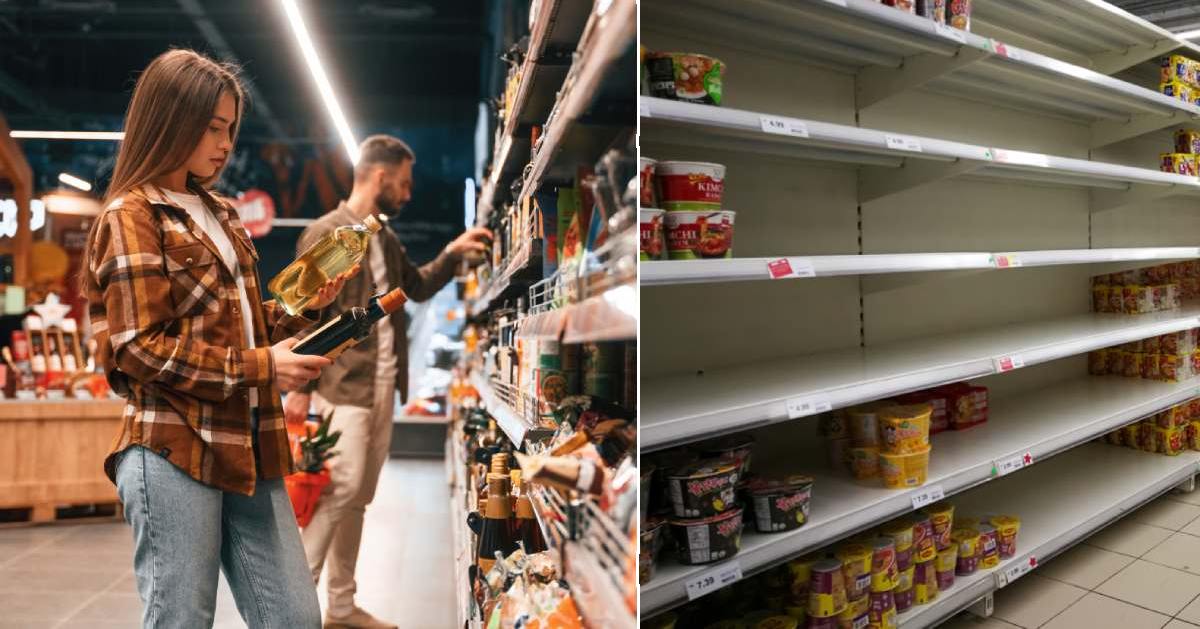
The war against Iran is putting a strain on Swedish food production, and the EU is making matters worse
The Federation of Swedish Farmers (LRF) warns that farming costs have risen by a couple of billion kronor in just two months, which will have an impact on shop shelves. Without increased self-sufficiency and preparedness, Sweden could become even more reliant on imports in the future.
The war against Iran Swedish food production is suffering. The strangulation of the Strait of Hormuz, through which a fifth of the world's oil and large quantities of fertiliser raw materials pass, has led to sharply rising oil and gas prices.
According to the LRF's chairman Palle Borgström the prices of diesel and mineral fertilisers have skyrocketed as a direct consequence of the war.
”Costs in agriculture have risen by a couple of billion over the last two months. Our calculations show that a cost increase of SEK 1 billion in agriculture can correspond to approximately 1–1.5 percent higher food prices.”, says Borgström.
With a total cost increase of around two billion kronor, this points to an initial price rise of 2–3 per cent in shops over the coming months. Borgström warns that, otherwise, this threatens Swedish food production:
”When costs increase sharply, prices must be allowed to follow suit – otherwise, we risk putting Swedish production out of business.”
Sweden's EU membership negatively affects the profitability of Swedish agriculture in several structural ways, amidst the ongoing war against Iran., according to the LRF and industry experts.
The free movement within the EU means that Swedish farmers face stiff competition from cheap imported food from countries with lower production costs. As Swedish farmers' input costs (diesel, fertiliser) skyrocket, they cannot fully pass on their price increases to wholesalers and retailers because Imports are keeping shop prices down.
The forecast The outlook for the coming months is therefore clear: expect food prices in shops to rise during the spring and summer of 2026. The extent of the rise will depend on how quickly the conflict in the Middle East subsides and how much of the cost increases are ultimately passed on to consumers.
"The result is that margins are under pressure and profitability is falling," says the meat producer Anders Hedberg to NewsVoice.
”If you haven’t already bought artificial fertiliser before the war with Iran, it will be expensive to buy it now, and the question then is whether it’s worth producing grain at all.” – Anders Hedberg, spokesperson for agriculture and forestry for the Ambition Sverige party
A Swedish cereal farmer can take out insurance against certain types of crop failure, but there is no comprehensive insurance that protects against an unprofitable harvest due to low market prices, high input costs or natural variations. Cover is limited solely to specific weather- or damage-related events arising from accidents and natural disasters.
The LRF points out that this is particularly serious during periods of geopolitical upheaval, such as during a war with Iran, when Swedish producers are unable to protect themselves through tariffs or quotas.
The war has not only driven up the price of crude oil but has also disrupted the transport of natural gas and urea. Normally, at least 25 per cent of the world’s nitrogen fertiliser is transported via the Persian Gulf. Without sufficient fertiliser, half of the world’s agricultural production is at risk of being lost, according to Patrik Myrelid, Head of Strategy at Lantmännen.
”If we were to remove fertiliser, half of the world’s agricultural production would disappear – and that is the foundation for all the raw materials that are then turned into various kinds of food. This would affect everything on your breakfast table: the milk, the porridge, the bread and the ham on your toast.”, Myrelid tells SVT.
Sweden does not produce any artificial fertiliser itself and is entirely dependent on imports. In the longer term, the industry is calling for emergency stocks and domestic production.
Carl Eckerdal, chief economist at the Food Companies, points out that the energy price shock is spreading throughout the entire food chain:
”No other external disruption has a greater impact than rising energy prices, which then lead to higher transport costs, more expensive packaging materials and higher energy costs in the processing stage. This affects the entire food supply chain.”
The longer the conflict continues, the greater and more prolonged the price shock will be. Already, the price of diesel in Sweden has risen by several kronor per litre in some areas, and the government has introduced temporary reductions in fuel duty to mitigate the effects ahead of the autumn election.
No major shortcomings – but fewer Swedish food products on the shelves
No specific products are singled out as being at risk of disappearing entirely, but experts warn of a general reduction in the supply of Swedish-produced food if farmers are forced to leave land fallow or cut back on production.
Even before the crisis, there was an ongoing shortage of Swedish beef in many shops, a trend that is now in danger of becoming more pronounced.
Sweden must have self-determination within Swedish agricultural policy during ”pre-war times” in Northern Europe, and especially now during an Iran war that affects Sweden's preparedness and daily food supply.
The food companies and the LRF (Federation of Swedish Farmers) emphasise that households and farmers are in the same boat. Rising world market prices affect everyone, but Swedish food production is particularly vulnerable, as we because of EU membership cannot protect our agriculture from cheap imported food.
If we hadn’t been members of the EU, we could have imposed the same requirements on imported food as we do on our own agricultural sector. Free trade is all well and good, but without its own food production, Sweden is in a vulnerable position when the world is in turmoil.
Text: Tortbjörn Sasserson, Marina Eriksson and Anders Hedberg, Ambition Sverige | Theme image: Food shortages and Swedish food production | Photos: Mstandret and Ellinnur, Elements.envato.com