Sick pay rules place an unreasonable risk on small employers and discourage many from hiring. The government should take over more of the cost in the smallest companies.
When an employee falls ill, the individual is responsible for one day's sick leave. The company, on the other hand, is responsible for up to 14 days of sick pay. It's a system that works in practice for larger employers, but can be devastating for the small businesses that form the backbone of the Swedish economy.
For a small firm with two, three or four employees, extended sick leave can quickly become a major blow. The cost of sick pay is combined with lost production, replacement staff and administration. Sick leave can simply be the difference between profit and loss - or in the worst case, between survival and closure.
Sweden needs more small businesses that grow, not more rules that hold back the willingness to hire.
The current sick pay system is built for the reality of large employers, where risks are spread across hundreds of employees. But for the small business owner - the hairdresser, the carpenter or the café owner - sick leave imposes an unreasonable financial burden. As a result, many are reluctant to hire, especially their first employee.
This is unfortunate. Sweden needs more small businesses that grow, not more rules that hold back the willingness to hire.
Ambition Sverige proposes that companies with fewer than five employees should only be responsible for one day's sick pay - the same amount of time as the individual. After that, the state should take over responsibility for sick pay.
For growing companies, the liability can increase gradually with the number of employees. This creates a fair and proportionate system, where risks are distributed according to the actual ability of companies to bear them.
Security and growth can go hand in hand.
Our reform would:
Reduce the thresholds for small businesses to dare to hire.
Create greater security for both employers and employees.
Strengthen Swedish competitiveness and contribute to more jobs throughout the country. If Sweden is serious about protecting small businesses, policy must also show this in practice. Making small businesses pay the same sick pay as large companies is neither fair nor sustainable.
It is time for a change. A modern sick pay system should encourage ambition - not penalise it.
Håkan Julander writes that you don't have to share all of Elsa Widding's views, but it is impossible to miss that Elsa is ”the only politician who really works politically in parliament”. Julander notes that Elsa speaks her mind and will not be silenced.
Mr Julander:
”Elsa Widding can say what she believes in. That's why she is really the only politician in Parliament.”
”It is breathtakingly eerie to hear Elsa talk about the workings of Parliament and how limited and inept our elected representatives are.”
The video interview with Elsa Widding is 1 hour and 37 minutes long and you can watch it at The dissident podcast, published on Substack.
Image: Dissidentpodden
In the recent interpellation debate with Elsa Widding, Defence Minister Pål Jonson said that ”over 80% of the Ukrainian people want to continue this fight according to the polls available”, But a July 2025 Gallup poll shows that only 24% of the population want the war to continue. A full 67 % want a negotiated peace.
In other words, this means that the Minister of Defence is riding roughshod over the Ukrainian people when he advocates continuing the war effort.
European leaders have reached a deadlock
Mr Jonson also supports the European leaders' negotiating proposal based on the return of all occupied territory to Ukraine, which after the end of the war will have a military force of 800,000 troops and the opportunity to become part of NATO.
Russia's goal with its military operation has been from the beginning that Ukraine should remain neutral and only be allowed to have a military force that cannot threaten Russia. You can say what you like about this, but I am only referring to what Russian representatives have said.
Does Mr Jonson really think that Russia, which has fought a very costly war for almost four years and lost hundreds of thousands of men, should just pack up and go home?
Such preconditions for a peace negotiation indicate only one thing. Mr Jonson and the government do not want to see an end to the war and one really has to wonder why at this time when the overwhelming majority of the Ukrainian people want a negotiated peace as soon as possible.
This is not hard to understand when Ukraine has lost more than 1.5 million soldiers in dead and missing. In the last exchange of bodies, there were 40 Ukrainian for every Russian.
Elsa Widding and Pål Jonson | Photos: T. Sassersson and Riksdagen
Pål Jonson calls for continued war effort
In this terribly pressurised situation for Ukraine, Pål Jonson wants to see a continuation of the war motivated by a lie about popular support. Pål Jonson says that Sweden will continue to support Ukraine's war effort as long as the Ukrainian people want it, but now the Ukrainian people no longer want it.
Will Mr Jonson bow to the will of the people or will he, like other European leaders, urge Mr Zelensky to continue sending his men into the Russian ”meat grinder”?
Ukrainian blood - Swedish security?
On support to Ukraine, the Minister of Defence says:
”It's support that we pay for in dollars and cents, the Ukrainian soldiers pay for it in blood and we should be grateful for that”.
Now, however, the Ukrainian people no longer want to pay with their blood, they want peace.
What is Pål Jonson missing here?
Sweden has not crossed its fingers that the Ukrainian people's explicit desire for a negotiated peace will be realised.
Mr Jonson says that aid to Ukraine is an investment in our own security! How can it be morally justifiable to encourage a war-weary and haemorrhaging people to continue bleeding for the sake of our security?
The whole argument is based on an intensive propaganda effort that has instilled such hatred of Russia in the Swedish people that they are prepared to sacrifice every fourth tax krona (5% of GDP) on weapons for an imaginary war against Russia that cannot be won. The people have been led to believe that after peace in Ukraine, Russia would immediately attack Sweden and other EU countries. A scenario that is completely unsupported in reality.
The war industry is always the winner
Those who benefit from this description of reality are of course the defence industry and its owners.
Trump and the US are seeking a negotiated settlement because their war industry does not need to rely on selling its weapons in Ukraine, they have made sure to sell lots of weapons to the EU which then donates them to Ukraine.
Trump who is a deal-maker has also managed to extract a promise from EU countries to spend 5% of their GDP on arms, equivalent to 23% of Sweden's annual budget. EU countries have also signed an agreement to buy US weapons worth €750 billion. Weapons that will make the EU ready for a war against Russia in 2030.
War against Russia - a project out of touch with reality
If Russia had any intention of occupying countries in Europe, it would have done so long ago, before we had time to build up our military forces. What do we need all these weapons for, anyway?
A war against Russia is impossible to win because Russia is a leading nuclear power with the world's most sophisticated nuclear weapons and a defence doctrine that says nuclear weapons will be used if the motherland is threatened. Does Pål Jonson want a nuclear war?
Everyone who has tried to defeat Russia in the past has failed, and that was before the nuclear era. To take a few examples, Sweden, Poland, the Ottoman Empire, France and Germany have all lost wars to Russia. Time for reflection?
In addition to nuclear weapons, Russia also has a whole arsenal of hypersonic missiles that no known air defence systems can combat today. The entire reasoning of Pål Jonson and the government is so crazy and out of touch with reality that it makes you scratch your head.
Foreign policy failure
Sweden's Minister for Foreign Affairs, Maria Malmer Stenergard, recently expressed her views on the peace negotiations and the proposed 28 points. Her proposal is instead a two-point programme: 1, Strengthen Ukraine. 2, Weaken Russia. Why is it that Sweden's foreign policy has now degraded to the point of weakening other countries? Isn't foreign policy about creating good relations with other countries?
We must hope that our responsible ministers sober up soon, otherwise Sweden risks sinking deeper into the swamp of misjudgements and lies they have created for our poor, battered country.
Time for a referendum?
The Ukrainian people want peace. When will the Swedish people have their say? Would it not be appropriate to hold a referendum on continued economic and military aid to Ukraine?
Ulf Gabrielsson, Spokesperson Defence and Security for Ambition Sverige (A) | Photo: Torbjörn Sassersson, 18 Nov 2025, Spain
In an increasingly tough line on immigration and security threats, US President Donald Trump has signed Executive Order 14161, which now threatens to significantly change the entry rules for millions of tourists and business travellers.
The order, signed on 20 January 2025, will require entrants from visa-free countries, including most EU countries - to account for up to five years of social media activity, phone numbers called, email addresses and biometric data such as fingerprints and iris scans. It is an escalation of Trump's ”America First”-agenda, but also a move that critics warn could lead to a global chain reaction of opinion control at borders.
Tighter controls: from ESTA to full screening
For travellers from 42 visa-free countries, such as Sweden, the UK and Germany, the Electronic System for Travel Authorisation (ESTA) process has so far been a simple formality - an online application for a $40 fee for up to 90 days of stay, but under a proposal from U.S. Customs and Border Protection (CBP), published in Federal Register On 10 December, the disclosure of detailed personal information will soon become mandatory. Among others:
Social media: Full history from platforms such as Facebook, Twitter (X), Instagram and TikTok over the last five years.
Contact details: Telephone numbers and e-mail addresses used during the same period.
Biometrics: Self-portrait (selfies) for facial recognition, plus fingerprint and eye scanning on entry.
Family ties: Names and dates of birth of close relatives.
CBP justifies the changes with reference to Executive Order 14161, which aims to ”protect the United States against foreign terrorists and other threats to national security and public safety”. The process is expected to take significantly longer - from days to weeks - and will affect not only new travellers but also those already in the US on visas, who will now be screened retroactively.
Tourism has already been hit hard. According to U.S. Travel Association International visitor numbers are expected to fall by 6.3% in 2025, with a loss of revenue of $12.5 billion - partly due to Trump's restrictive policies. Experts warn that the new rules could scare away even more people, especially ahead of events such as the 2026 World Cup.
”Wrong” opinions as security threats: from students to tourists
The most controversial issue is how to use this data. It is still unclear exactly what views can lead to rejection, but the pattern is clear from existing cases. Already today, student visas are being cancelled for foreign students who have criticised Israel or engaged in pro-Palestinian activities. One example is the Turkish PhD student Rümeysa Öztürk at Tufts University, whose visa was revoked in March 2025 following an opinion piece criticising the university's handling of the Gaza conflict. She was arrested and detained for six weeks before a federal court temporarily restored her status, citing violations of free speech.
Similar cases include Mahmoud Khalil and Mohsen Mahdawi at Columbia University, whose visa was cancelled for ”anti-Semitic protests” and ”support for terrorism” - terms that critics say are widely used to silence dissent. A senior official at the State Department recently testified in court that criticism of Israeli policies, such as calls for reduced military aid or ”abolition of Zionism”, can weigh in on visa decisions.
This ties in with a leaked DOJ memo from Attorney General Pam Bondi, dated 4 December 2025, which expands the definition of ”domestic terrorism”. The memo lists views such as ”anti-American”, ”anti-Christian” and ”anti-capitalist” as potential indicators of terrorist threats, along with support for ”mass immigration”, ”radical gender ideology” and opposition to immigration laws. The FBI is encouraged to draw up lists of suspicious groups and offer rewards for tips - a policy critics call ”a thought police law” and a threat to the First Amendment of the US Constitution.
These criteria are expected to be applied to travellers, meaning that a tweet on climate justice or criticism of US foreign policy could potentially block your trip.
Global ripple effect: EU and UK respond with their own measures?
The US policy risks triggering a domino effect. The European Commission has not yet officially responded to the proposal, but concerns are growing in Brussels and member states. According to Euronews and the BBC, the new rules could lead to reciprocal demands: EU citizens forced to open their profiles publicly to US authorities could face similar screening when entering Europe. Germany's foreign ministry has already warned that ”reciprocity” may be necessary, while the French government is discussing biometric checks for US travellers.
The UK, which is not an EU member but part of the visa waiver programme, has gone further. The country has recently arrested journalist Richard Medhurst under Terrorism Act 2000, suspected of ”expressing support for a prohibited organisation” through his reporting on Gaza and Lebanon. Medhurst, a Syrian-British journalist with over a million followers, was held for 24 hours without clear explanation - a case the NUJ and IFJ call a ”chilling threat to press freedom”.
Also former MP George Galloway, leader of the Workers Party of Britain, was arrested in September 2025 at Gatwick Airport during counter-terrorism-legislation. He and his wife were questioned for hours about their views on the Gaza conflict, without being formally arrested, but with orders not to leave. Galloway described it as ”political persecution” and part of a broader campaign against left-wing opposition.
These incidents illustrate a trend: countries like the UK and potentially EU countries are now introducing their own registers of ”wrong” views and contacts, requiring ”clean” profiles for entry. This is creating a world where travelling requires not just a passport, but political loyalty.
Implications for travellers and democracy
For the average Swedish tourist, this means significantly longer waiting times, greater uncertainty and a sense of surveillance. Even business travellers risk being stopped if an old tweet flagged as ”anti-American”, and for activists? It is a direct attack on free speech, which the ACLU and FIRE call ”ideologically driven counter-terrorism”.
The Trump administration defends itself with national security, but critics point to the lack of clear guidelines - what exactly is ”hateful ideology”? As Loyola Law Schools Professor Marissa Montes notes: ”It is broad and discretionary, giving officials the power to interpret at will.”
While the proposal is out for consultation, it is likely to come into force soon. Travellers are urged to clear profiles and be careful, but in a democracy thoughts should be free, not border guarded. The question is: will the world accept a future where passports require political purity?
Göran Reuterdahl, former Vice President of companies such as Ericsson and Microsoft and CEO of smaller listed companies, spokesperson for Swedish Sovereignty in Ambition Sverige | Photo: Ulf Gabrielsson, retouch Andreas Jansson
We are a fledgling party with big ambitions - to enter Parliament in 2026. Today, our activities are kept alive thanks to the support of you, our fantastic members, but to take the next step, we need to strengthen our financial base and find bigger external funders.
To achieve this, we want to establish a foundation, with the aim of making it easier for sponsors to make larger donations. In order to establish the foundation, we need to raise an initial capital, therefore we humbly turn to you as a member of Ambition Sverige.
If you can contribute with a gift - big or small - you will help us reach our goal.
SEK 150,000 is needed to set up the foundation. As a newly established party, we lack party support and are completely dependent on external donations. Every cent makes a difference and brings us one step closer to our goal.
If you are able to help, you can swish your contribution to 123 433 63 84, or transfer money to our account number SHB 6151 794 503 632 or Bankgiro 5030-9715.
Thank you in advance for your support. Please mark the contribution ”Foundation”.
The Ambition Sverige party has the ambition to reduce the employer's contribution for small businesses. This would be of great benefit to an ignored social group that makes great contributions to Sweden, write Micael Hamberg and Bo Hansson.
Swedish small businesses - from the self-employed up to 10-20 employees - are too often left in the political backwater. Almost no-one, apart from the Federation of Small Businesses, highlights their circumstances and problems - the smallest businesses are simply taken for granted.
The Ambition Sverige party wants to change this by specifically prioritising improvements to small business conditions in its economic policy. After all, it is small businesses that hire the most new workers of all business categories, which should be particularly important in these days of both high unemployment and the rapid rise of AI.
Sweden already has high unemployment, which entails high public costs in the form of welfare benefits. So far, there are no effective measures that clearly reduce unemployment.
In addition, many companies are starting to plan for the introduction of AI as a cost efficiency measure in their operations. In the near future, many administrative positions in both the private and public sectors will be replaced by AI - positions that will require new employment.
The Ambition Sverige party believes that one of the most important measures to counteract increased unemployment is to make it easier for small businesses to hire new employees. What prevents companies today is the high employer's contribution. Reduce the employer's contribution by removing the general payroll tax, which is a pure punitive tax on companies for having employees. If the general payroll tax is removed, the employer's contribution will be reduced by 11.62 percentage points to 19.80 per cent instead of the current 31.42 per cent.
The abolition of the general payroll tax gives companies extra room to hire new employees. It also provides the opportunity to raise the wages of those already employed. Both circumstances have a positive tax effect for society, in the form of increased income tax and increased consumption.
As a first step, the general payroll tax can for the first five (5) employees of the companies is removed. This makes it easier for small businesses in particular to hire more employees. This limits the immediate tax loss and the dynamic effects, in the form of more employees and their increased consumption, begin to have a positive effect before the next step in the phase-out is implemented.
Many small businesses are barely making a profit. With the removal of the general payroll tax for the first five employees, a company with a turnover of SEK 15 million and an average monthly salary of SEK 37,000 would have its annual payroll costs reduced by SEK 257,964, thereby increasing the company's profit margin by +1.7 per cent - which would be both much needed and necessary.
It is curious that no other parties seems to care about small businesses and their future. It is particularly odd that the centre-right government is instead considering raising the general payroll tax from 11.62% to 12.62% from 2026, as Taxpayers recently noted. This would be a step in the wrong direction, when Sweden needs to create more jobs.
Swedish economic growth and welfare are far too important to be neglected. Swedish economic policy must focus on the right political measures to reduce unemployment and thus secure welfare. Ambition Sverige agrees with Småföretagarna that the removal of the general payroll tax from employer contributions is a priority measure. It would be both necessary and gratifying if any other political party wanted to do the same - for the sake of Sweden!
Small businesses are Sweden's future, but the sick pay system makes it risky to hire. This is written by Micael Hamberg and Bo Hansson, spokespersons for Ambition Sverige.
When an employee falls ill, the individual is responsible for one day's sick leave. The company, on the other hand, is responsible for up to 14 days of sick pay. It's a system that works in practice for larger employers - but can be devastating for the small businesses that form the backbone of the Swedish economy.
For a small firm with two, three or four employees, extended sick leave can quickly become a major blow. The cost of sick pay is combined with lost production, replacement staff and administration. Sick leave can simply be the difference between profit and loss - or in the worst case, between survival and closure.
A system that penalises the smallest
The current sick pay system is built for the reality of large employers, where risks are spread across hundreds of employees. But for the small business owner - the hairdresser, the carpenter or the café owner - sick leave imposes an unreasonable financial burden. As a result, many are reluctant to hire, especially their first employee.
This is unfortunate. Sweden needs more small businesses that grow, not more rules that hold back the willingness to hire.
Ambition Sverige's proposal
Ambition Sverige proposes that companies with fewer than five employees should only be responsible for one day's sick pay - the same period as the individual. Thereafter, the state should take over responsibility for sick pay.
For growing companies, the liability can increase gradually with the number of employees. This creates a fair and proportionate system, where risks are distributed according to the actual ability of companies to bear them.
Security and growth can go hand in hand
Our reform would:
Reduce the thresholds for small businesses to dare to hire.
Create greater security for both employers and employees.
Strengthen Swedish competitiveness and contribute to more jobs throughout the country.
If Sweden is serious about protecting small businesses, policy must also demonstrate this in practice. Making small businesses pay the same sick pay as large companies is neither fair nor sustainable.
It is time for a change. A modern sick pay system should encourage ambition - not penalise it.
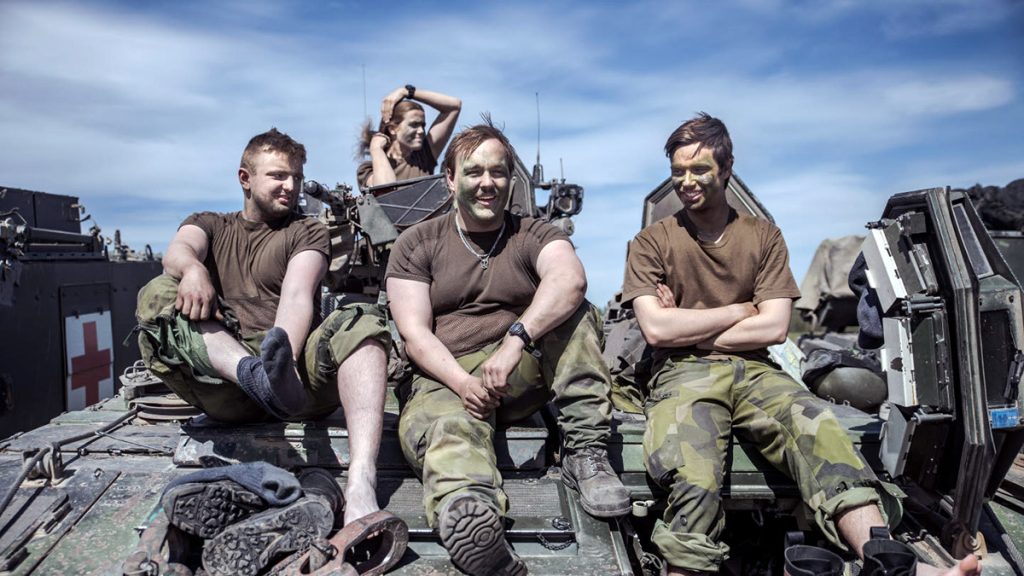
Elsa Widding, an independent member of parliament and party leader of Ambition Sverige, fears that Swedish NATO soldiers will end up in Ukraine. She confronted Defence Minister Pål Jonson. NewsVoice interviewed Widding after the debate.
Widding writes that the US has realised that the Ukrainian war is lost. Therefore, the US has withdrawn and seems to have no plans to supply Ukraine with more arms, but despite this, Sweden continues to send both money and weapons to Ukraine, prolonging the suffering of the Ukrainian people.
In October 2025, the Swedish Parliament approved a decision to participate in NATO's collective deterrence and defence activities. This gives the government a mandate in urgent situations (for example, when a war is being lost) to deploy Swedish armed forces for a limited time.
However, all wars are limited in time, so there is a wide margin of interpretation when it is ”urgent” and how long Swedish soldiers should be replenished as they die on a front to ”deter” and ”defend” Sweden in neighbouring Ukraine, which is not really a geographical neighbour.
This amendment is about NATO collective defence and operations, not specifically about a peacekeeping force in Ukraine, but Widding concludes that the government can still send soldiers to a war zone such as Ukraine.
Widding believes that Pål Jonson, who governs Sweden in all defence matters, is exposing Sweden to security risks with his general defence policy:
”Sweden's military support for Ukraine and the DCA, which allows US weapons on Swedish territory, constitute a strong provocation against Russia that exposes Sweden to extreme risks.”
Our young conscripts are being sacrificed by Pål Jonson and Ulf Kristersson when they are lured into the narrative of an imminent Russian threat," Widding told NewsVoice.
”They will face certain death if they are sent to Ukraine via NATO.”
Swedish young soldiers. Press photo: Jonas Helmersson for the Swedish Armed Forces
Swedish NATO soldiers
Elsa Widding put the following questions to Pål Jonson during the interpellation debate:
Has Pål Jonson analysed the meaning of ”urgent situations”? What situations might prompt the government to send Swedish soldiers to Ukraine?
Can Sweden send elite troops to Ukraine without prior notice?
How many Swedish soldiers are at risk of dying in a Swedish military operation in Ukraine?
On 5 October 2025, Parliament approved a new decision-making regime for participation in NATO's collective deterrence and defence activities. This means that the government gets its own mandate in urgent situations to deploy armed forces for a limited time.
The amendment is about NATO collective defence and operations, not specifically about a peacekeeping force in Ukraine. This would still require a special parliamentary decision under the current rules. There is, of course, a risk of arbitrariness if the government can take such far-reaching measures for a certain period of time without either informing Parliament or allowing Parliament to make a decision.
My question is whether the Minister of Defence and the Swedish people understand what this means. If Sweden deploys troops against Russia, Sweden has declared war on Russia (without time limit).
What barriers are there now to the government sending Swedish soldiers to the war in Ukraine - to face certain death?
I would therefore like to put the following questions to the Minister for Defence, Pål Jonson:
Has the Minister analysed the meaning of ”urgent situations”, i.e. situations that may lead the government to send soldiers to Ukraine, and if so, can the Minister explain the results?
Could there be talk of Sweden sending elite troops to Ukraine without warning, and if so, can the Minister indicate whether or not Sweden has already sent elite troops to Ukraine?
Has the Minister analysed how many Swedish soldiers risk losing their lives in the event of a Swedish operation in Ukraine, and if so, can the Minister give an account of the results?
Gunilla Edelstam, an associate professor of law, warns that the Swedish Parliament is trying to make it more difficult to change the Constitution and if it is voted through, it could be almost impossible for Sweden to leave the EU.
Text: Gunilla Edelstam | Photo: Arild Vågen, CC BY-SA 4.0
Form of Government (RF) is the constitution that sets out the foundations of the Swedish system of government. Among other things, the RF sets out the basis for how the Riksdag governs Sweden through legislation. According to the current RF, which came into being in 1974, two parliamentary decisions are required to amend a constitution with an intervening election to the Riksdag. Half of the members of the Riksdag must then vote in favour of an amendment to the two Riksdag decisions.
Now the Swedish Parliament wants to make it harder to change the RF (Government Bill 2024/25:165). In the second decision after the parliamentary election, a qualified majority of two-thirds of the members of the Riksdag must vote in favour. Otherwise, the decision will fall and the proposed amendment to the Instrument of Government will not apply.
Parliament took the first decision on this change in October 2025. Parliamentary elections will be held in September 2026, after which Parliament will decide once more on this amendment. If the decision on the amendment is supported by at least half of the members of both parliaments, the Constitution will be amended.
Thereafter, any future amendments to the RF will require 2/3 of the members of parliament to vote in favour of a proposed amendment in the second round after a general election. This means that it will be very difficult to change the form of government in the future.’
Why do you want to make such a change?
The aim is said to be to strengthen democracy. Is this true?
Having a system where a majority (at least half) of the members of parliament must vote in favour of an amendment is perfectly reasonable, but making constitutional amendments more difficult by requiring a 2/3 majority for amendment is hardly democratic in a country like Sweden.
This means that a minority of 1/3 of the members of the Riksdag can prevent important changes to the RF. This does not strengthen democracy in Sweden. For example, EU membership is based on the fact that Sweden is a member of the European Union according to RF 1:10. This is thus laid down in the Constitution.
If Sweden were to want to leave the EU in the future, it would be sufficient for 1/3 of the members of the Riksdag to vote against. It will probably be impossible to leave the EU in the future if the proposal for a 2/3 majority wins through.
Membership of the EU means that legislation on issues such as the environment, electricity, forestry, competition, trade, agriculture and labour law can be decided by the EU. Decisions on such issues are taken by the European Parliament. Sweden's 21 MEPs out of a total of 720 cannot stand up to a majority of MEPs from other EU countries. EU legislation on electricity has instead led to an increase in Swedish electricity prices.
This is because Germany has the right to buy electricity from Sweden under an EU law. Germany buys a lot of electricity from Sweden. EU legislation has also had a negative impact on Sweden's forestry industry. Sweden has the most forest of all EU countries. About 63% of Sweden is covered by forest.
Forest industry representatives find the EU's requirements too tough, unrealistic and ineffective. This could hit Swedish jobs and export revenues hard. We could regain our sovereignty and self-government by amending RF 1:10 and leaving the EU, but with 1/3 of MPs voting against, it is unlikely that an exit will be possible in the future.
With regard to EU membership in particular, we could have chosen a different route to enable withdrawal if Sweden had had a constitutional court. If such a court existed, we could ask it to declare our membership of the EU invalid. The basis for this is the starting point in Chapter 1, Section 1 of the Swedish Constitution, which states that ”all power emanates from the people”.
This means that the Swedish people vote for their politicians in the Riksdag. These elected politicians then have the right to legislate in Sweden. We could demand that EU membership be cancelled on the grounds that the Riksdag never had the right to transfer legislative power to the EU. Legislative power only exists when the power emanates from the Swedish people.
The Riksdag consists of the elected representatives, i.e. the politicians elected by the Swedish people. The Riksdag's task is to legislate, but when the link to the Swedish people disappears, i.e. when legislative power is transferred from the Riksdag to the EU Parliament, this is a violation of RF 1:1.
The Swedish people have not voted for all the politicians in the EU, so the power exercised in the EU does not come from the Swedish people. We have only elected the 21 Swedish MEPs but not the other 699 MEPs in the EU.
The EU therefore does not have the right to legislate in a way that applies to the Swedish people. The link to the Swedish people does not exist for the EU Parliament. There is no legal right for the Swedish Parliament to transfer legislative power to the EU. This is the meaning of RF 1:1. We could therefore have EU membership declared invalid by a Swedish constitutional court. The problem is that we have no constitutional court in Sweden.
Limitation of state power is a characteristic of a modern democratic state. Limitations should be set out in a constitution such as the RF when it comes to the parliament's governance of the country, but if the parliament in future decisions (after the next parliamentary elections) accepts that 1/3 of the members of parliament in the future should be able to stop any attempt to change the constitution (for example by voting against any proposal to introduce a constitutional court), this may mean that it is not possible to limit important parts of state power.
There is a case for retaining the current more democratic possibility of amending the Constitution by a simple majority, where the votes of half of the members of parliament are required to accept a constitutional amendment.